
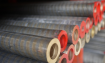
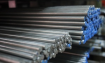
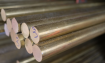



ทองเหลืองฟอสเฟอร์บรอนซ์ Phosphor Bronze
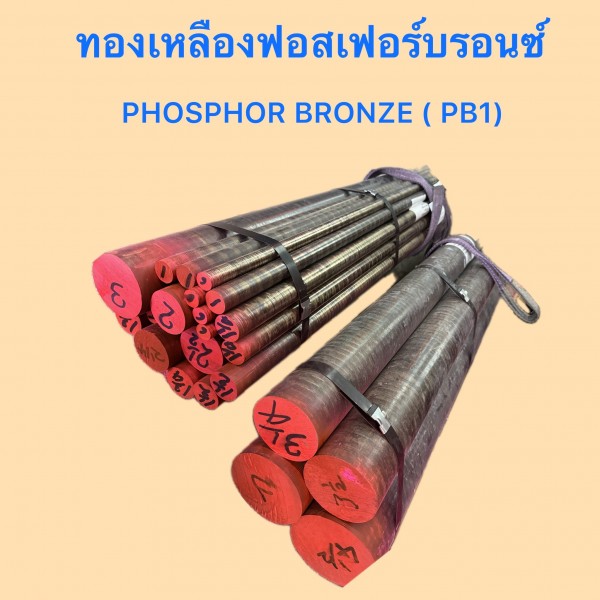


ทองเหลืองฟอสเฟอร์บรอนซ์ เกรด PB1
1. ประวัติความเป็นมา
บรอนซ์ (Bronze) มีประวัติศาสตร์ยาวนานกว่า 5,000 ปี เริ่มต้นในยุคสำริด (Bronze Age) ราว 3,000 ปีก่อนคริสตกาล เมื่อมนุษย์โบราณค้นพบว่าการผสมทองแดง (Copper) กับดีบุก (Tin) ได้โลหะที่แข็งแกร่งและทนทานกว่าโลหะบริสุทธิ์อย่างมีนัยสำคัญ บรอนซ์จึงกลายเป็นวัสดุหลักในการผลิตอาวุธ เครื่องมือ และเครื่องประดับในยุคนั้น
ต่อมาในช่วงต้นคริสต์ศตวรรษที่ 19 นักโลหะวิทยาชาวยุโรปค้นพบว่าการเติมฟอสฟอรัส (Phosphorus) เพียงเล็กน้อย (0.5–0.8%) ลงในโลหะผสมทองแดง-ดีบุก สามารถเปลี่ยนแปลงคุณสมบัติได้อย่างมหาศาล ได้แก่ การเพิ่มความแข็งแรงทางกล การลดออกซิเจนในโลหะหลอมเหลว (Deoxidizer) และเพิ่มความลื่นไหล (Fluidity) ระหว่างการหล่อขึ้นรูป จึงเกิดเป็น "ฟอสเฟอร์บรอนซ์" (Phosphor Bronze) ขึ้นมา
ฟอสเฟอร์บรอนซ์ถูกพัฒนาและกำหนดมาตรฐานเป็นเกรดต่างๆ ตาม British Standard BS1400 โดยเกรด PB1 (หรือที่รู้จักในชื่อ CC481K / CuSn11P-C ตามมาตรฐาน BS EN 1982) คือเกรดที่มีปริมาณดีบุกสูงสุดในตระกูล ทำให้มีความแข็งแรงและทนทานต่อการสึกหรอมากที่สุด เหมาะสำหรับงานอุตสาหกรรมหนักที่ต้องการความน่าเชื่อถือสูง
2. ฟอสเฟอร์บรอนซ์ PB1 คืออะไร?
ฟอสเฟอร์บรอนซ์ PB1 คือโลหะผสมทองแดง-ดีบุก-ฟอสฟอรัส (Cu-Sn-P Alloy) ที่ผลิตโดยกระบวนการหล่อแบบต่อเนื่อง (Continuous Casting) จัดเป็น Single-Phase Alloy ที่มีความแข็งแรงสูง ทนต่อการสึกหรอ กัดกร่อน และแรงกระแทก มักจำหน่ายในรูปของแท่งกลม (Round Bar) หรือท่อสำหรับนำไปกลึงขึ้นรูปเป็นชิ้นส่วน
มาตรฐานที่เกี่ยวข้อง:
- BS1400 PB1 (มาตรฐานอังกฤษ)
- BS EN 1982 CC481K / CuSn11P-C (มาตรฐานยุโรป)
3. ส่วนผสมทางเคมี (Chemical Composition)
|
ธาตุ |
Cu |
Sn |
Pb |
Zn |
Fe |
Al |
|||||||
|
ปริมาณ (%) |
ส่วนที่เหลือ |
10.6 |
0.25 |
0.05 |
0.10 |
0.01 |
|||||||
|
|
|
|
|
|
|
|
|||||||
|
ธาตุ |
Mn |
Ni |
Sb |
Si |
P |
As |
S |
||||||
|
ปริมาณ (%) |
0.05 |
0.10 |
0.05 |
0.02 |
0.625 |
0.05 |
0.05 |
||||||
4. บทบาทของธาตุแต่ละชนิดต่อคุณสมบัติโลหะ
• ทองแดง (Cu) — ธาตุหลัก: เป็นพื้นฐานของโลหะผสม มอบความต้านทานการกัดกร่อน ความสามารถนำไฟฟ้า และขึ้นรูปขั้นพื้นฐาน
• ดีบุก (Sn) 10.6% — ธาตุเสริมหลัก: เพิ่มความแข็งและความแข็งแรงของโลหะ เมื่อสัดส่วนถึง 10-12% โลหะผสมมีความแข็งแรงสูงมาก ทนการกัดกร่อนจากน้ำทะเลและสารเคมีได้ดีเยี่ยม
• ฟอสฟอรัส (P) 0.625% — ตัวกำจัดออกซิเจน: ทำหน้าที่เป็น Deoxidizer ในขณะหลอมเหลว เพิ่มความลื่นไหลของโลหะ เสริมความแข็งผิว ผ่านโครงสร้าง Cu3P และเพิ่มความทนทานต่อการสึกหรอ
• ตะกั่ว (Pb) 0.25% — ตัวช่วยการตัดเฉือน: ช่วยในการกลึง (Machinability) ทำให้ผิวชิ้นงานเรียบขึ้น และลดแรงเสียดทานในระหว่างการตัดเฉือน
• เหล็ก (Fe) 0.10% และนิกเกิล (Ni) 0.10%: ช่วยปรับปรุงโครงสร้างเกรน (Grain Refinement) และเพิ่มความแข็งแรงของโลหะผสม
5. คุณสมบัติทางกลศาสตร์ (Mechanical Properties)
|
คุณสมบัติ |
ค่าที่ทดสอบได้ |
มาตรฐาน BS1400 (ขั้นต่ำ) |
สถานะ |
|
Tensile Strength (แรงดึง) |
390 MPa |
360 MPa |
✓ ผ่าน (+8%) |
|
Proof Strength 0.2% (จุดคราก) |
190 MPa |
170 MPa |
✓ ผ่าน (+12%) |
|
Elongation (การยืดตัว) |
8% |
6% |
✓ ผ่าน (+33%) |
|
Hardness BHN (ความแข็ง) |
110 BHN |
100 HB |
✓ ผ่าน (+10%) |
6. ค่าความแข็ง (Hardness)
PB1 มีค่าความแข็ง 110 BHN (Brinell Hardness Number) ซึ่งสูงกว่าค่าขั้นต่ำมาตรฐาน 10% ความแข็งระดับนี้เหมาะอย่างยิ่งสำหรับงานผิวสัมผัสที่ต้องทนการสึกหรอ เช่น บูช แบริ่ง และเฟือง โดยมีความแข็งสูงกว่าอลูมีเนียมบรอนซ์ทั่วไป แต่ยังคงสามารถกลึงได้อย่างสะดวก
7. คุณสมบัติทางความร้อนและกายภาพ (Thermal & Physical Properties)
|
คุณสมบัติ |
ค่า |
|
จุดหลอมละลาย (Melting Range) |
920 – 980°C |
|
การนำความร้อน (Thermal Conductivity) |
~50 W/m·K |
|
ความหนาแน่น (Density) |
8.7 – 8.9 g/cm³ |
|
อุณหภูมิใช้งานสูงสุด (Max Service Temp.) |
~260°C |
|
ความสามารถทนน้ำทะเล |
ดีเยี่ยม (Excellent) |
|
ความสามารถเชื่อม/บัดกรี |
บัดกรีและเชื่อมได้ (Solderable & Brazeable) |
8. การใช้งานที่เหมาะสม (Suitable Applications)
● บูชและแบริ่ง (Bushings & Bearings): งานรับแรงกดและแรงเฉือนสูง ทำงานได้ที่ความเร็วสูงพร้อมการหล่อลื่น ใช้ในเครื่องจักรอุตสาหกรรม
● เฟืองหนอน (Worm Gears & Worm Wheels): ทนต่อแรงกดสูง การสึกหรอต่ำ เหมาะสำหรับระบบส่งกำลังที่ต้องการความแม่นยำ
● ปั๊มและวาล์ว (Pumps & Valves): ต้านทานการกัดกร่อนจากของเหลว น้ำทะเล และสารเคมีได้ดี ใช้ในอุตสาหกรรมปิโตรเคมีและอาหาร
● ชิ้นส่วนเรือและทะเล (Marine Components): ทนน้ำเค็มได้ดีเยี่ยม ใช้ในเพลา ก้านเพลา ใบจักร และอุปกรณ์ใต้น้ำ
● ชิ้นส่วนเครื่องจักรหนัก (Heavy Machinery Parts): รับแรงกระแทกได้ดี เหมาะกับงานที่รับโหลดสูงและต้องการอายุการใช้งานยาวนาน
● แม่พิมพ์และอุปกรณ์ความแม่นยำ: ใช้ในงานที่ต้องการขนาดคงที่และไม่เกิดประกายไฟ เช่น อุตสาหกรรมระเบิด
9. เหมาะกับผู้ใช้งานกลุ่มใด?
▸ โรงกลึง / ผู้รับเหมาผลิตชิ้นส่วน: นำไปกลึงขึ้นรูปเป็นบูช แบริ่ง ตลับ สลัก ให้ตรงตามแบบทางวิศวกรรม
▸ โรงงานผลิตเครื่องจักร: ใช้ชิ้นส่วนที่ต้องการความแข็งแรงสูงและทนทานในระบบส่งกำลัง
▸ อู่ต่อเรือ / อุตสาหกรรมทางทะเล: ใบจักร ก้านเพลา ชิ้นส่วนใต้น้ำที่ต้องทนน้ำเค็ม
▸ โรงงานปิโตรเคมีและเหมืองแร่: ปั๊มและวาล์วสำหรับของเหลวกัดกร่อน ทนต่อสภาพแวดล้อมรุนแรง
▸ อุตสาหกรรมยานยนต์: บูชแขนปีกนก ชิ้นส่วนระบบส่งกำลัง และชิ้นส่วนพวงมาลัย
▸ อุตสาหกรรมก่อสร้างและโครงสร้าง: แบริ่งสะพาน รองรับแรงกดสูง ทนต่อสภาพอากาศ
ฟอสเฟอร์บรอนซ์ PB1 มีชื่อเรียกและเกรดเทียบเท่าในมาตรฐานสากลต่างๆ ดังตารางต่อไปนี้ ซึ่งช่วยให้สามารถระบุวัสดุได้ถูกต้องเมื่อทำงานกับแบบวิศวกรรมที่ใช้มาตรฐานของแต่ละประเทศ:
10. ตารางเทียบเกรดมาตรฐานสากล (International Standards Cross-Reference)
|
องค์กรมาตรฐาน |
มาตรฐาน / Standard |
เกรดเทียบเท่า / Equivalent Grade |
ประเทศ / Region |
|
British Standards Institution |
BS 1400 |
PB1 |
สหราชอาณาจักร (UK) |
|
European (CEN) |
BS EN 1982:2008 |
CC481K (CuSn11P-C) |
ยุโรป (Europe) |
|
ISO |
ISO 1338 |
CuSn10P |
สากล (International) |
|
Japanese (JIS) |
JIS H5113 |
PBC2C |
ญี่ปุ่น (Japan) |
|
German (DIN) |
DIN 1705 |
G-CuSn10 |
เยอรมนี (Germany) |
|
American (ASTM) |
ASTM B 505 |
C90700 |
สหรัฐอเมริกา (USA) |
|
American (SAE) |
SAE J462 |
SAE 65 / SAE 65c |
สหรัฐอเมริกา (USA) |
|
Australian (AS) |
AS 1565:1985 |
C90710 |
ออสเตรเลีย (Australia) |
|
Australian (AS) |
AS 1565:1974 |
904D |
ออสเตรเลีย (Australia) |
|
Italian (UNI) |
UNI 7013-72 |
2A |
อิตาลี (Italy) |
|
UK Defence |
Def Stan 02-838 Part 1 |
PB1 |
UK MoD |
|
UK Naval |
NES 838 Part 1 |
PB1 |
Royal Navy |
* ค่าส่วนผสมอาจมีความแตกต่างเล็กน้อยระหว่างมาตรฐาน ควรตรวจสอบเอกสารมาตรฐานฉบับเต็มก่อนสั่งซื้อ
สนใจสินค้า ติดต่อ หจก. ยงไทยโลหะภัณฑ์ โทร. 02-6395944 | www.yongthaimetal.com
English Article
Phosphor Bronze Grade PB1: The Industrial Workhorse
1. History & Origin
Bronze has a history spanning over 5,000 years, dating back to the Bronze Age around 3,000 BCE when early humans discovered that alloying copper (Cu) with tin (Sn) produced a far stronger and more durable metal. Bronze became the primary material for weapons, tools, and ornaments of the era.
In the early 19th century, European metallurgists discovered that adding a small amount of phosphorus (0.5–0.8%) to a copper-tin alloy dramatically transformed its properties: strengthening the alloy mechanically, acting as a deoxidizer during casting to remove dissolved oxygen, and improving fluidity for easier mold-filling. This gave birth to what we now call Phosphor Bronze.
Phosphor Bronze was subsequently standardized into various grades under British Standard BS1400. Grade PB1 — also designated CC481K and CuSn11P-C under BS EN 1982 — carries the highest tin content in the PB family (~10–12%), delivering superior mechanical strength and wear resistance, making it the preferred choice for demanding heavy-industry applications.
2. What Is Phosphor Bronze PB1?
Phosphor Bronze PB1 is a copper-tin-phosphorus (Cu-Sn-P) alloy produced primarily by continuous casting. It is a single-phase alloy that combines high mechanical strength, excellent wear resistance, outstanding corrosion resistance — especially in marine environments — and good machinability. It is commonly supplied as round bars, tubes, and plates for machining into precision components.
- Standard: BS1400 PB1 | BS EN 1982 CC481K | CuSn11P-C
- Source: AW Fraser Ltd, New Zealand (Melted and Cast in New Zealand)
- Certificate Reference: MC 38546, dated 10 June 2025
3. Chemical Composition (from Certificate MC 38546)
Method of Analysis: O.E. Spectrometer. All values in %.
|
Element |
Cu |
Sn |
Pb |
Zn |
Fe |
Al |
Mn |
Ni |
Sb |
Si |
P |
As |
S |
|
Content (%) |
Balance |
10.6 |
0.25 |
0.05 |
0.10 |
0.01 |
0.05 |
0.10 |
0.05 |
0.02 |
0.625 |
0.05 |
0.05 |
4. Role of Key Alloying Elements
• Copper (Cu) — Base Metal: Provides the foundation: inherent corrosion resistance, electrical conductivity, and formability.
• Tin (Sn) at 10.6% — Primary Strengthener: Dramatically increases hardness and tensile strength. At 10–12% Sn, the alloy exhibits high strength and excellent corrosion resistance in seawater and chemical environments.
• Phosphorus (P) at 0.625% — Deoxidizer & Hardener: Removes dissolved oxygen during melting (deoxidizer), improves casting fluidity, forms Cu3P precipitates that increase surface hardness and wear resistance.
• Lead (Pb) at 0.25% — Machinability Aid: Improves chip breaking and surface finish during machining operations. Reduces tool wear.
• Iron (Fe) at 0.10% & Nickel (Ni) at 0.10%: Promote grain refinement, improving overall strength and toughness of the alloy.
5. Mechanical Properties (Tested Lot Results)
|
Property |
Tested Value |
BS1400 Minimum |
Status |
|
Tensile Strength |
390 MPa |
360 MPa |
✓ Pass (+8%) |
|
0.2% Proof Strength |
190 MPa |
170 MPa |
✓ Pass (+12%) |
|
Elongation |
8% |
6% |
✓ Pass (+33%) |
|
Hardness |
110 BHN |
100 HB |
✓ Pass (+10%) |
6. Thermal & Physical Properties
|
Property |
Value |
|
Melting Range |
920 – 980°C (1,688 – 1,796°F) |
|
Thermal Conductivity |
~50 W/m·K |
|
Density |
8.7 – 8.9 g/cm³ |
|
Maximum Service Temperature |
~260°C (500°F) |
|
Seawater Corrosion Resistance |
Excellent |
|
Solderability / Brazability |
Good (solderable and brazeable) |
7. Typical Applications
● Bushings & Bearings: Ideal for high-load, high-speed bearing surfaces. Used extensively in industrial machinery, pumps, and conveyor systems with adequate lubrication.
● Worm Gears & Worm Wheels: Excellent resistance to wear under high contact stress. Widely used in speed reducers and precision gearboxes.
● Pumps & Valves: Resists corrosion from liquids, seawater, and mild chemicals. Common in marine, petrochemical, and water treatment plants.
● Marine Components: Outstanding seawater corrosion resistance. Used for propeller shafts, stern tubes, rudder bearings, and underwater fittings.
● Heavy Machinery Parts: Absorbs shock loads well. Suitable for components exposed to vibration and impact in mining, construction, and heavy manufacturing.
● Precision Tooling & Non-Sparking Tools: Used in explosive or flammable environments where spark-free operation is critical.
8. Who Should Use PB1?
▸ Precision Machining Shops: Machine PB1 bars into custom bushings, bearings, and sleeves to exacting tolerances.
▸ Industrial Machinery Manufacturers: High-strength components for gearboxes, reducers, and power transmission systems.
▸ Shipyards & Marine Industry: Propellers, shafts, and underwater components requiring superior seawater resistance.
▸ Petrochemical & Mining Plants: Pump impellers, valve bodies, and wear plates in corrosive fluid environments.
▸ Automotive & Transportation Industry: Suspension bushings, steering components, and transmission parts.
▸ Civil Engineering & Bridge Construction: Bridge bearings and structural joints requiring long service life under heavy loads.
Phosphor Bronze PB1 is recognized under multiple international standards. The table below provides the equivalent designations, enabling correct material identification when working with engineering drawings from different countries:
9. International Standards Cross-Reference Table
|
Standards Body |
Standard |
Equivalent Grade |
Region |
|
British Standards Institution |
BS 1400 |
PB1 |
United Kingdom |
|
European (CEN) |
BS EN 1982:2008 |
CC481K (CuSn11P-C) |
Europe |
|
ISO |
ISO 1338 |
CuSn10P |
International |
|
Japanese (JIS) |
JIS H5113 |
PBC2C |
Japan |
|
German (DIN) |
DIN 1705 |
G-CuSn10 (2.1052.04) |
Germany |
|
American (ASTM) |
ASTM B 505 |
C90700 |
USA |
|
American (SAE) |
SAE J462 |
SAE 65 / SAE 65c |
USA |
|
Australian (AS) |
AS 1565:1985 |
C90710 |
Australia |
|
Australian (AS) |
AS 1565:1974 |
904D |
Australia |
|
Italian (UNI) |
UNI 7013-72 |
2A |
Italy |
|
UK Defence |
Def Stan 02-838 Part 1 |
PB1 |
UK MoD |
|
UK Naval |
NES 838 Part 1 |
PB1 |
Royal Navy |
* Minor compositional differences may exist between standards. Always verify against the full standard document before procurement.
For orders and inquiries: Yong Thai Metal Ltd Part | Tel. 02-6395944 | www.yongthaimetal.com
ไซส์ทองเหลืองฟอสเฟอร์บรอนซ์(PB1)กลมตันที่มีจำหน่าย
***ตัดเเบ่งขาย ลูกค้าสามารถเเจ้งไซส์ที่ต้องการได้เลย
6 หุน
1 นิ้ว
1 นิ้ว 2 หุน
1 นิ้ว 4 หุน
1 นิ้ว 6 หุน
2 นิ้ว
2 นิ้ว 2 หุน
2 นิ้ว 4 หุน
3 นิ้ว
3 นิ้ว 2 หุน
3 นิ้ว 4 หุน
4 นิ้ว
4 นิ้ว 2 หุน
5 นิ้ว
6 นิ้ว
ทองเหลืองฟอสเฟอร์บรอนซ์ (Phosphor bronze) เป็นโลหะผสมของทองแดง สังกะสี และฟอสฟอรัส โดยทั่วไปจะมีปริมาณทองแดงมากกว่า 90% สังกะสีประมาณ 5-10% และฟอสฟอรัสประมาณ 0.1-0.5% ส่วนผสมของฟอสฟอรัสในทองเหลืองฟอสเฟอร์บรอนซ์ส่งผลต่อคุณสมบัติทางกายภาพและทางเคมีของโลหะผสมนี้ ฟอสฟอรัสประมาณ 0.1% จะช่วยเพิ่มความต้านทานต่อการกัดกร่อน ฟอสฟอรัสประมาณ 0.3% จะช่วยเพิ่มความแข็งแรงและความแข็ง ฟอสฟอรัสประมาณ 0.5% จะช่วยเพิ่มความต้านทานต่อการสึกหรอ
คุณสมบัติทางกายภาพของทองเหลืองฟอสเฟอร์บรอนซ์ ได้แก่
- ความหนาแน่น: 8.5-8.7 g/cm3
- จุดหลอมเหลว: 950-970 °C
- การนำไฟฟ้า: 60-70% ของทองแดงบริสุทธิ์
- การนำความร้อน: 30-40% ของทองแดงบริสุทธิ์
คุณสมบัติทางเคมีของทองเหลืองฟอสเฟอร์บรอนซ์ ได้แก่
- ความต้านทานต่อการกัดกร่อน: ดี
- ความต้านทานต่อการสึกหรอ: ดี
- ความต้านทานต่อสารเคมี: ดี
ทองเหลืองฟอสเฟอร์บรอนซ์มีการใช้งานหลากหลาย เช่น
- อุปกรณ์ประปา
- ชิ้นส่วนเครื่องจักร
- ชิ้นส่วนยานยนต์
- ชิ้นส่วนเครื่องมือกล
- ชิ้นส่วนอุตสาหกรรมการบิน
- ชิ้นส่วนอุปกรณ์การแพทย์
ตัวอย่างการใช้งานทองเหลืองฟอสเฟอร์บรอนซ์ ได้แก่
- ท่อน้ำประปา
- วาล์วน้ำประปา
- หัวฉีดน้ำ
- ใบพัดเรือ
- ชิ้นส่วนเครื่องยนต์
- ชิ้นส่วนเกียร์
- ชิ้นส่วนเครื่องมือตัด
- ชิ้นส่วนอุปกรณ์ผ่าตัด
ทองเหลืองฟอสเฟอร์บรอนซ์เป็นโลหะผสมที่มีสมบัติทางกายภาพและทางเคมีที่ดีเยี่ยม จึงมีการใช้งานที่หลากหลาย เหมาะสำหรับงานที่ต้องการคุณสมบัติความแข็งแรง ความแข็ง ความทนทานต่อการกัดกร่อน และการต้านทานต่อการสึกหรอ
ค่า เคมี ของทองเหลืองบรอนซ์ PB1
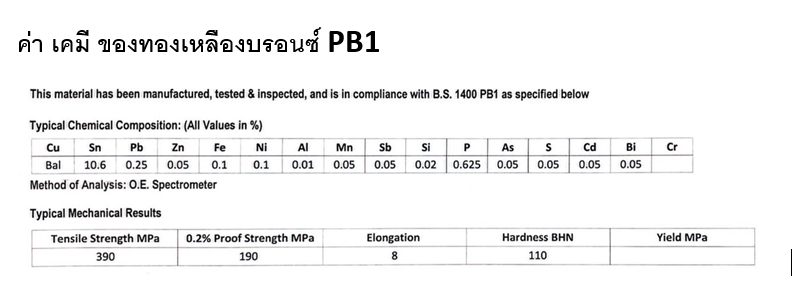
ตอนนี้ที่ทางร้านเรามีจำหน่าย ก็มี ทองเหลืองฟอสเฟอร์บรอนซ์
ลูกค้าสามารถติดต่อสอบถามข้อมูลเพิ่มเติม ได้ที่
Tel : 080-6194655, 02-6395944, 02-2340461, 02-2340905
Line Id : @yongthai1213
Email: yongthai1640@gmail.com
Facebook: https://www.facebook.com/YongthaiMetal/